hanafi
When does travel start for qasr? Leaving the city limits
In short
You only start qasr after leaving your own town’s built‑up area; before that you pray in full, by agreement of Hanafi, Shafi‘i, Maliki and Hanbali. How to measure the qualifying distance is disputed: many count from the town edge (classical texts), others from where you set off. This matters near the thresholds: Hanafi about 77 km (48 miles), others about 80 km (50 miles).
Two similar questions often get run together: when you may begin shortening, and how the qualifying distance is measured. The first is agreed by all schools; the second is genuinely disputed—especially for trips close to the 77–80 km threshold. Getting this right decides whether your Dhuhr on the motorway is two rak‘ahs or four.
You only start qasr after leaving your town’s built‑up area
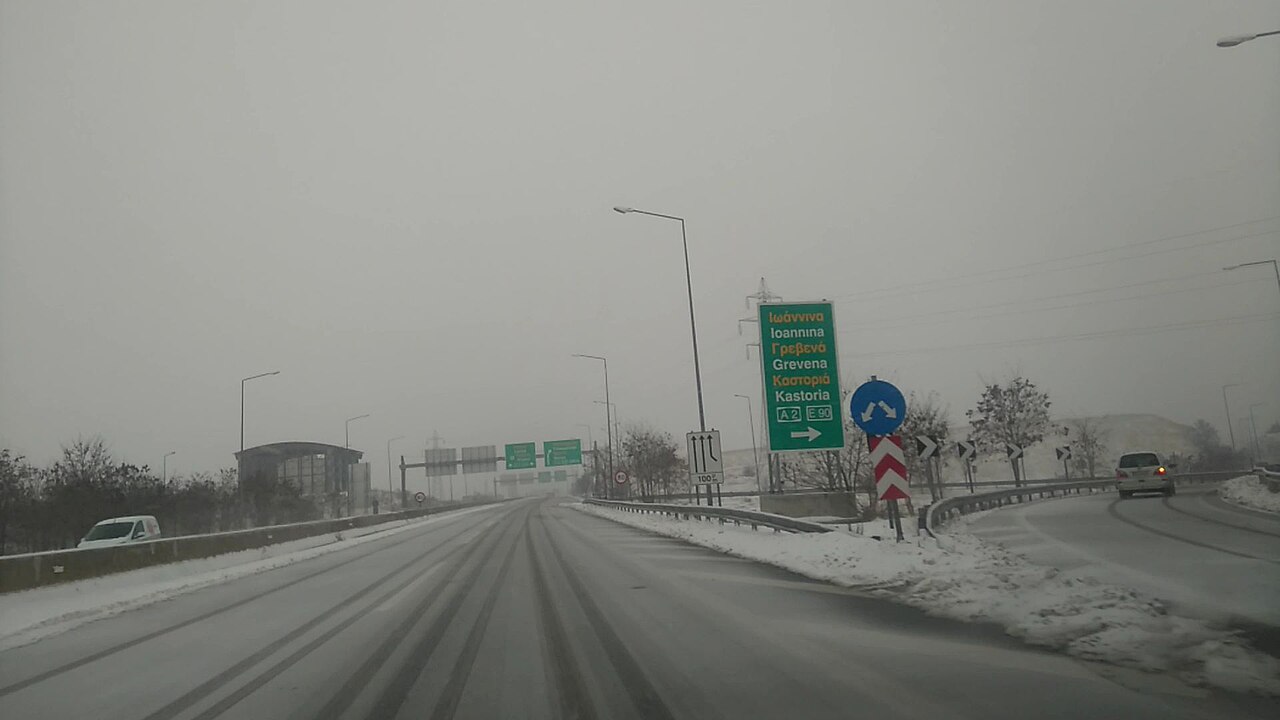
All four Sunni schools agree on when you may begin shortening: not until you have exited the built‑up area of your own town. While you are still within your city, suburb, or continuous built‑up sprawl, you are a resident (muqeem) and must pray in full. Once you pass the last houses/shops and the built‑up area ends, you become a traveller (musafir) and may shorten.
- This applies whether you are driving, on a train, or departing from a city airport. Until you have actually left the built‑up limits, you pray full.
- The proof-texts for qasr are general. Allah permits shortening on a journey (Qur’an 4:101), and the Prophet ﷺ called it “a charity Allah has given you, so accept His charity.” The disagreement is not about permission, but where the journey starts for the law to apply.
Qasr applies to Dhuhr, ‘Asr and ‘Isha only; Fajr and Maghrib are never shortened in any school.
When does travel start for qasr: from my front door or from the city edge?
This is the second, genuinely disputed question. Two approaches are found in practice:
- Classical reading (widely cited in the madhhab manuals): measure the qualifying distance from the edge of your town’s built‑up area. You only become a traveller after you exit; the outward leg that still lies within the city limits does not count.
- Contemporary practical reading (common in many modern answers): measure from where you set off (your home, workplace, campus, or airport). On this view, if your total route from your starting point is beyond the threshold, you qualify.
This only changes the verdict for near‑threshold trips. If your journey is clearly above 100 km, both views say you qualify; if it is 40 km, both say you do not.
What our tool can and can’t do:
- The calculator measures the distance between the two points you set, along a road route you choose or as a straight line. It does not detect town boundaries or know where your home is. If you prefer the stricter, edge‑of‑town reading, set your starting point yourself at the last houses of your city and compare results using Qasr Calculator.
The distance thresholds and stay limits, by school
The qualifying distance is close across the schools but not identical, and when your traveller status ends also differs. These figures matter when you’re near the line.
- Hanafi: about 77 km (48 miles). Traveller status ends if you intend to stay 15 days or more.
- Shafi‘i, Maliki, Hanbali: about 80 km (50 miles), often expressed as 4 burud / 16 farsakh. Traveller status ends if you intend to stay 4 days or more. The Shafi‘i do not count the days of arrival and departure; the Maliki count 4 full days (20 prayers); the Hanbali texts classically say more than 20 prayers. Our calculator uses 4 days for all three.
These rules sit alongside the “leave your city limits first” agreement explained above: all schools require you to be outside the built‑up area before you begin actually shortening.
At-a-glance comparison
| Issue | Hanafi | Shafi‘i | Maliki | Hanbali |
|---|---|---|---|---|
| When you may start qasr | Only after leaving your town’s built‑up area (agreement of all four schools) | Only after leaving your town’s built‑up area | Only after leaving your town’s built‑up area | Only after leaving your town’s built‑up area |
| Distance to qualify | About 77 km (48 miles) | About 80 km (50 miles; 4 burud/16 farsakh) | About 80 km (50 miles; 4 burud/16 farsakh) | About 80 km (50 miles; 4 burud/16 farsakh) |
| Traveller status ends (intended stay) | Intend 15 days or more | Intend 4 days or more (arrival/departure not counted) | Intend 4 full days (20 prayers) | Classically more than 20 prayers; calculator uses 4 days |
| Prayers shortened | Dhuhr, ‘Asr, ‘Isha (Fajr/Maghrib never shortened) | Same | Same | Same |
For deeper details on counting the 4 days, see our post The 4‑Day Rule in Qasr: Do Arrival and Departure Days Count?. For the Hanafi 15‑day limit, see The Hanafi 15‑Day Rule: When You Become Muqeem.
Worked example 1: London to Birmingham by road
- Route: London (Westminster) to Birmingham city centre via M40/M42 is roughly 190–200 km by road.
- Start of qasr: You pray in full until you have left London’s built‑up area. Once you are past the last continuous suburbs and open country begins, you may shorten.
- Distance measure: Whether you count from your door or from London’s edge makes no difference to the verdict here; the journey is far beyond both 77 km (Hanafi) and 80 km (Shafi‘i/Maliki/Hanbali).
Worked example 2: A near‑threshold inter‑city trip
Consider a regional journey that maps at around 78–85 km by your chosen road route—common between neighbouring cities in the UK. Here the starting‑point question can matter:
- If you measure from your front door and the total is 82 km, all schools say the distance is sufficient. But you still only begin shortening after the built‑up area ends.
- If you apply the classical edge‑of‑town measure, and the segment from the city edge to your destination is 75–79 km, then on a strict Hanafi reading (≈77 km) you could be just under, while Shafi‘i/Maliki/Hanbali at ≈80 km may still qualify or be borderline.
- Practical tip: Use the calculator twice—once from your actual start, once from the last houses on your city’s outbound road—to see if the different readings change the verdict in your case.
What “leaving the city limits” means in practice
- Continuous built‑up sprawl: In large conurbations where one suburb runs into the next with no meaningful break, treat the whole continuous built‑up area as “the town.” You begin shortening only once you leave that continuous sprawl.
- Ring roads and municipal boundaries: Legal boundaries on a map (city councils, counties) are not the rule of thumb. What counts is the end of the built‑up area—practically, when buildings and streets give way to open land for a meaningful stretch.
- Airports and stations: If your airport or main station lies inside the built‑up area, you pray in full while there. You begin shortening once the train or road journey has carried you beyond the last houses; on a flight, you will have left the built‑up area by take‑off.
Road distance or straight line—does it affect when travel “starts”?
How you measure the distance (road route vs straight line) is a separate question from where the journey begins. The schools discussed their thresholds in pre‑modern terms; today, many scholars allow either reasonable method. In practice:
- Road routes are concrete and match what you actually travel.
- Straight‑line (“as the crow flies”) is a conservative sense of how far apart the places are.
Either way, you still only begin shortening after leaving your town’s built‑up area. Our calculator lets you switch between these measurements to compare.
Evidence and spirit of the concession
Qur’an 4:101 permits shortening on a journey, and the Prophet ﷺ described qasr as a divine charity to be accepted. The jurists then set workable yardsticks—distance and stay intention—and anchored the start of qasr to physically leaving one’s town. Respecting both the letter and spirit means not shortening too early, but also not denying yourself a valid concession once you are truly travelling.
Practical checklist before you set off
- Plan your first prayer: If Dhuhr is due while you’re still in town, pray it in full; if it will fall after you leave the built‑up area, you may shorten it.
- Check the distance both ways if you’re near 77–80 km, especially in the Hanafi school.
- Confirm your intended stay. Hanafi ends at 15 days; Shafi‘i/Maliki/Hanbali end at 4 days (with their counting nuances).
- If in doubt, ask a local scholar about your specific situation. Our calculator can guide your planning, but it does not issue fatwas.
Frequently asked questions
If I’m flying from an airport inside my city, when do I start qasr?
You pray in full while still within your city’s built‑up area, including at the airport if it lies within that area. You begin shortening only after you have actually left the built‑up limits. In practice, that will be after your journey out of the city by road or rail, or once the flight has taken off and you have departed the city sprawl.
My town merges into the next without a clear gap. When can I shorten?
Treat continuous suburbs as one built‑up area. You only begin qasr when you have passed beyond the continuous sprawl into open country. The municipal boundary is not the key test; the practical indicator is the end of continuous buildings for a meaningful stretch. If you are unsure, wait until you are clearly beyond the suburbs.
Do arrival and departure days count toward the 4‑day limit?
The Shafi‘i do not count the days of arrival and departure toward the 4 days; the Maliki require 4 full days (20 prayers); Hanbali texts classically say more than 20 prayers, and many apply 4 days. See our guide: The 4‑Day Rule in Qasr. Hanafis have a different limit of 15 days.
How do I measure distance if I follow the edge‑of‑town view?
Set your start point at the last houses on your outbound road and measure to your destination. Then compare it with a measurement from your actual starting point. For near‑threshold trips, these two readings can differ. Our tool cannot detect city limits automatically, so placing the start marker carefully is key.
What if my route has multiple stops before I leave the city?
Multiple errands inside your own city don’t make you a traveller. You’re still a resident until you leave the built‑up area. If you have stops outside town, you can still shorten once you’ve exited the built‑up area, subject to the distance threshold and your intended stay at each stop. Plan around Dhuhr, ‘Asr and ‘Isha accordingly.
References
- Quran 4:101 – Concession to shorten prayer while travelling — Primary verse permitting qasr on a journey.
- The Prayer of the Traveler — Summary of traveller prayer; start after leaving town; distance.
Educational, and not a fatwa: this reflects widely held positions in the four Sunni madhhabs. For a ruling on your own situation, ask a qualified scholar.