travel
Praying on a plane: qasr, qibla and what to do when you land
In short
You may only start shortening once you have left the built‑up area of your town (agreed by all four schools). For distance, Hanafis use about 77 km (48 miles); Shafi’i, Maliki and Hanbali use about 80 km (50 miles, 4 burud/16 farsakh). Many measure from home; classical texts count from the town edge. On board, pray standing and facing the qibla if you can; if not, pray seated by gesture before the time ends. After landing, traveller status ends if you intend 4 days (Shafi’i, Maliki, Hanbali) or 15 days (Hanafi).
Flying compresses space and time, which is exactly why travellers’ concessions exist. The duty of salah remains, but the way you fulfil it adapts: qasr (shortening), facing the qibla as best you can, and sometimes praying seated if you truly cannot stand. Distance and stay-length rules still decide whether you are a traveller.
When can I start shortening on a flight?
All four schools agree: you do not shorten any prayer until you have actually left the built‑up area of your own town. Before that point you are a resident and must pray in full, even if you are already at the airport. Only once your journey has taken you beyond the town’s developed boundary does qasr apply.
Does my flight meet the distance for qasr?
- Hanafi: about 77 km (48 miles) defines a qualifying journey; traveller status ends with an intention to stay 15 days or more.
- Shafi’i, Maliki, Hanbali: about 80 km (50 miles, often expressed as 4 burud / 16 farsakh); traveller status ends with an intention to stay 4 days or more. The Shafi’i classically do not count the days of arrival and departure; the Maliki count 4 full days (20 prayers); Hanbali texts classically say more than 20 prayers. For practical purposes, many contemporary tools use 4 days for all three.
Almost all flights exceed 77–80 km, including short domestic hops. Two details still matter:
- How to measure distance: classical works measured from the edge of the town; many contemporary answers simply take your journey from where you set off. Present it as a difference of view, because it only changes the verdict for trips near the threshold (rare for flights, but it can matter for very short routes).
- Mode of travel: qasr is about the journey’s distance and intent, not whether you go by road, sea or air. Air travel can qualify just as land travel does.
Our tool measures between the two points you set, along a route you choose or as a straight line. It does not detect city limits or where your home is. If you follow the stricter reading (from the town’s edge), place your starting point there yourself and compare figures.
For background on measuring distance, see our guide: How Far Do You Have to Travel to Shorten Your Prayer?
How do I face the qibla and actually pray on a plane?
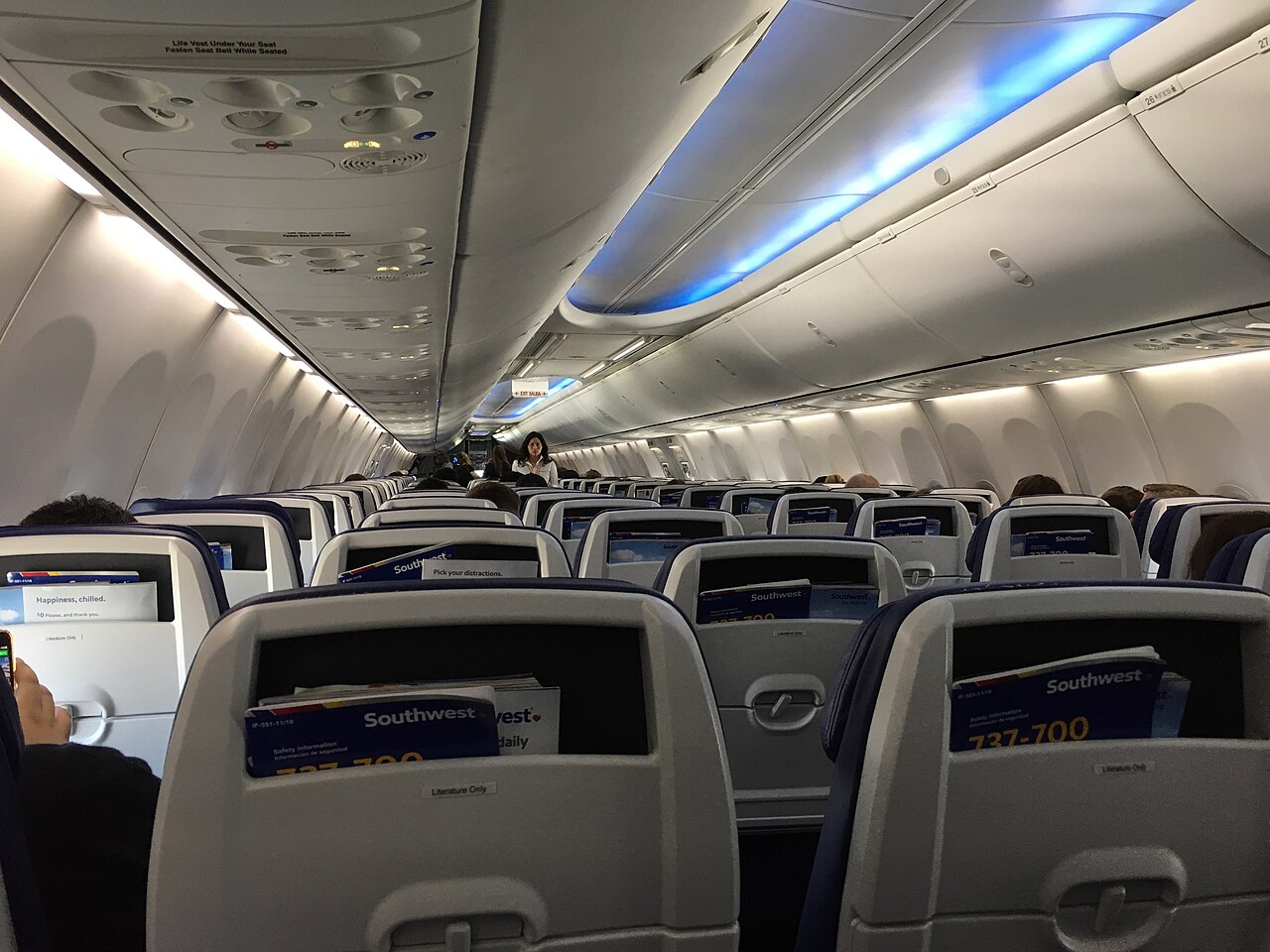
The baseline for a fard prayer is to stand, face the qibla, and perform ruku’ and sujud. On an aircraft:
- If you can safely stand, face the qibla and pray without blocking aisles or disobeying crew, do so. A galley or bulkhead space sometimes works; ask politely.
- If you cannot stand or face the qibla, do the best you reasonably can and pray within the time. Sit in your seat, face the qibla at least for the opening takbir if possible, and make ruku’/sujud by lowering your head (sujud lower than ruku’). If you can turn your torso towards the qibla for part or all of the prayer, do so.
- If you expect to land in time to pray properly on the ground within the prayer time, you may delay until landing. If the time will end in‑air, pray on board as above.
Finding the qibla in‑flight:
- Use the seat‑back map to determine your track and a compass app to estimate the qibla bearing from your location.
- The qibla can shift as the plane changes course; keep your body oriented as best as space allows. Where only minor adjustments are possible, prioritise starting the prayer facing the correct direction and maintaining it as you can.
Qasr applies only to Dhuhr, Asr and Isha. Fajr and Maghrib are never shortened.
Can I combine (jam’) on the plane, and how does it differ from qasr?
Qasr is shortening four‑rak’ah prayers to two. Jam’ is combining two prayers in one time (e.g., Dhuhr with Asr, or Maghrib with Isha). Most Shafi’i, Maliki and Hanbali allow jam’ for travellers; Hanafis generally do not combine outside Hajj at Muzdalifah, though they may join by practical arrangement (e.g., pray Asr near the end of Dhuhr time). See our explainer: Combining prayers while travelling (jam’) and how it differs from qasr.
On flights, jam’ can reduce disruption when prayer times are tight. If you are Hanafi, focus on praying each fard within its time; if you are Shafi’i, Maliki or Hanbali, you may combine according to your school’s conditions.
What happens when I land: do I keep shortening or become resident?
Traveller status ends by intention:
- Hanafi: if you intend to stay 15 days (or more) at the destination, you are a resident from arrival and pray in full. Intend fewer than 15 days, you continue qasr.
- Shafi’i, Maliki, Hanbali: if you intend 4 days (or more), you are a resident from arrival and pray in full. Intend fewer than 4 days, you continue qasr. The Shafi’i classically do not count the days of arrival and departure; the Maliki count 4 full days; Hanbali texts often phrase it as more than 20 prayers. For simplicity, our tool uses 4 days for all three.
For the details on counting days, see: The 4‑Day Rule in Qasr: Do Arrival and Departure Days Count? and the Hanafi view here: The Hanafi 15‑Day Rule: When You Become Muqeem.
A quick comparison of the four schools
| School | Distance to qualify | When traveller status ends |
|---|---|---|
| Hanafi | About 77 km (48 miles) | Intend to stay 15 days or more |
| Shafi’i | About 80 km (50 miles; 4 burud/16 farsakh) | Intend to stay 4 days or more (arrival/departure not counted classically) |
| Maliki | About 80 km (50 miles; 4 burud/16 farsakh) | Intend to stay 4 full days (20 prayers) |
| Hanbali | About 80 km (50 miles; 4 burud/16 farsakh) | Intend to stay 4 days (classical texts: more than 20 prayers) |
Remember: you cannot shorten until you have left your town’s built‑up area. Fajr and Maghrib are never shortened.
Worked example: London to Istanbul, then five nights in Istanbul
- Distance: London to Istanbul by air is roughly 2,500–2,600 km (1,550–1,615 miles) — far beyond all thresholds.
- Outbound: You may start qasr once your journey takes you beyond Greater London’s built‑up area. If your Dhuhr time will end mid‑air and there is no safe standing space, pray seated by gesture facing the qibla as best you can.
- On arrival: You intend five nights (which usually means 5 days). Shafi’i, Maliki, Hanbali: you are a resident from arrival (4‑day rule), so pray full prayers in Istanbul. Hanafi: you are still a traveller (less than 15 days), so continue qasr until departure.
- Return: You resume qasr after leaving Istanbul’s built‑up area.
Multi‑leg flights, layovers and overnight connections
- Layover shorter than the stay limit (e.g., 3–10 hours): you remain a traveller in all schools. You may continue qasr and (if your school allows) combine.
- Overnight at a hub: If you intend to remain there for 4 days (Shafi’i/Maliki/Hanbali) or 15 days (Hanafi), you become a resident there from arrival and pray in full; otherwise you keep shortening.
- Distance counting: For qasr, the overall leg you are undertaking is what matters, not whether each hop alone exceeds 80 km. That said, very short hops near the threshold can be sensitive to how you measure.
To check distances (road vs straight line), alternative routes, and multi‑stop plans with per‑stop stay lengths, you can use the Qasr Calculator. It measures between the points you set, but it does not know city limits; if you want to count from the town edge, place your start/end accordingly.
Measuring distance for qasr on flights: from where to where?
Two distinct questions often get mixed up:
- When to start shortening? Agreed by all: only after leaving your town’s built‑up area.
- How to measure the qualifying distance? Classical texts counted from the edge of the town; many Muslims today measure from their door. This only changes results for journeys near 77–80 km. For flights, this rarely affects the verdict, but it can on short domestic sectors.
Our tool can show both road and straight‑line distances between any two points you choose. It does not detect city boundaries. If the stricter approach matters to you, set the starting pin at your town’s edge and compare.
Prayer times, wudu and practical tips in the air
- Prayer times shift with your heading and speed. Use an app that works offline and input your current location; or estimate from the sun where visible.
- Wudu: Use the aircraft lavatory sensibly. A small bottle of water at your seat also works. If you truly cannot access water until the time is nearly over, pray in your state and make up only if a valid excuse was absent; where tayammum applies, it requires a clean earthy surface, which may not be available on board.
- Safety and courtesy: Never ignore crew instructions. If you cannot safely stand and face the qibla for the whole prayer, pray seated by gesture within the time.
Which prayers do I shorten, and which stay the same?
- Shorten: Dhuhr, Asr and Isha — from four to two rak’ahs when you qualify as a traveller.
- Never shortened: Fajr remains two; Maghrib remains three. Maghrib may be combined with Isha for travellers in Shafi’i, Maliki and Hanbali schools; Hanafis generally do not combine, but still shorten Isha to two.
Evidence and why the concession exists
The Qur’an permits shortening during travel: “And when you travel throughout the land, there is no blame upon you for shortening the prayer…” (Qur’an 4:101). The Prophet ﷺ described it as “a charity Allah has given you, so accept His charity.” The practice of qasr during journeys — by land, sea or air — follows this concession while maintaining the prayer within its time as best as one can.
As with all travel‑fiqh, confirm with a scholar for your specific itinerary and school. Our aim here is to map the widely‑taught positions so you can plan well and pray with clarity.
Frequently asked questions
If I can stand only for some of the prayer on a plane, is it valid?
Yes. Stand and face the qibla for as much of the prayer as you can without causing danger or obstruction, and complete the rest seated by gesturing (with sujud lower than ruku’). If the prayer time will end in air, pray within the time using the best posture you can safely manage.
Should I delay my prayer until landing if the time will not end?
If you reasonably expect to land with enough time to pray properly on the ground within the prayer time, you may delay. If the time will end before landing, pray on board, standing and facing the qibla if possible; otherwise pray seated by gesture. In all cases, keep the prayer within its time.
How do I find the qibla direction on a plane?
Use the seat‑back map to note your current track and a compass app to estimate the bearing to Makkah from your location. Turn your body towards that bearing as best you can. If the plane turns mid‑prayer, adjust within what’s safely possible; at minimum, face the qibla at the opening takbir if you can.
Do I start qasr from home or from the edge of my city?
All agree you may not shorten until you have left the built‑up area of your town. Regarding how to measure the qualifying distance, classical texts counted from the town’s edge, while many today measure from where they set off. It only changes the verdict for journeys near the 77–80 km threshold.
Can I combine Maghrib and Isha on a flight?
Shafi’i, Maliki and Hanbali schools allow combining for travellers with conditions, so you may combine Maghrib and Isha in air or at the airport when needed. Hanafis generally do not combine outside Hajj at Muzdalifah; they keep each prayer in its time while shortening Isha to two rak’ahs.
References
- Qur’an 4:101 – shortening the prayer when travelling — Primary verse permitting qasr in travel.
Educational, and not a fatwa: this reflects widely held positions in the four Sunni madhhabs. For a ruling on your own situation, ask a qualified scholar.