day trip
Qasr Day Trip: Can I Shorten My Prayer on a Same‑Day Return?
In short
Yes. A day trip qualifies for qasr if the journey is about 77 km (48 miles) in the Hanafi school or 80 km (50 miles) in the Shafi'i, Maliki and Hanbali schools. Returning the same night makes no difference, because traveller status depends on the distance and on how long you intend to stay, not on sleeping away from home.
A day trip trips people up because it feels too ordinary to count. You leave after breakfast, you are home for dinner, and nothing about the day resembles the caravan journeys the classical texts describe. Yet the concession does not turn on sleeping away from home. It turns on how far you went and what you intended once you arrived.
Qasr day trip: what actually qualifies?
Two things decide it, and the length of your day is neither of them:
- How far you went. About 77 km (48 miles) in the Hanafi school, about 80 km (50 miles) in the other three. The table further down gives each school’s figure.
- What you intended once you arrived. Every school ends traveller status at some planned length of stay, and the shortest of those limits is four days. A few hours on the ground never comes close.
Two further points hold across all four schools. You become a traveller once you leave your town’s built‑up area and you stop being one when you re‑enter it, so the hours before you clear the edge of town are prayed in full. And only Dhuhr, Asr and Isha are shortened; Fajr and Maghrib never are.
Day trip scenarios you might be planning
- A long business meeting in another city, back the same evening: if the distance is at or above the threshold, you can shorten Dhuhr, Asr and Isha during the trip.
- A short hop to a nearby town for shopping: if it’s under 77–80 km, you pray full—even if you’re out all day.
- Trains and planes: the same distance rule applies. Flying or taking high‑speed rail does not change the thresholds.
Madhhab differences at a glance
The four Sunni schools agree that travel permits shortening, based on Qur’an 4:101 and the Prophet ﷺ shortening on journeys (including during the Conquest of Makkah). They differ in how far counts as travel and when traveller status ends.
| School | Travel distance | When traveller status ends by intention | Notes |
|---|---|---|---|
| Hanafi | about 77 km (48 miles) | Intend to stay 15 days or more | Distance often measured as the customary journey; qasr for Dhuhr/Asr/Isha only |
| Shafi'i | about 80 km (50 miles; 4 burud / 16 farsakh) | Intend to stay 4 days or more (arrival and departure days usually excluded) | Classically counted from the edge of the town |
| Maliki | about 80 km (50 miles; 4 burud / 16 farsakh) | Intend 4 full days / 20 prayers | Conservative on full‑day count |
| Hanbali | about 80 km (50 miles; 4 burud / 16 farsakh) | Intend to stay 4 days or more | Classically expressed as more than 20 prayers |
On a day trip you are usually intending to stay far less than these limits, so if you meet the distance you remain a traveller for the whole outing.
Worked example: London–Birmingham same‑day return
- Outbound: Leave central London in the morning for a client visit in Birmingham, return in the evening.
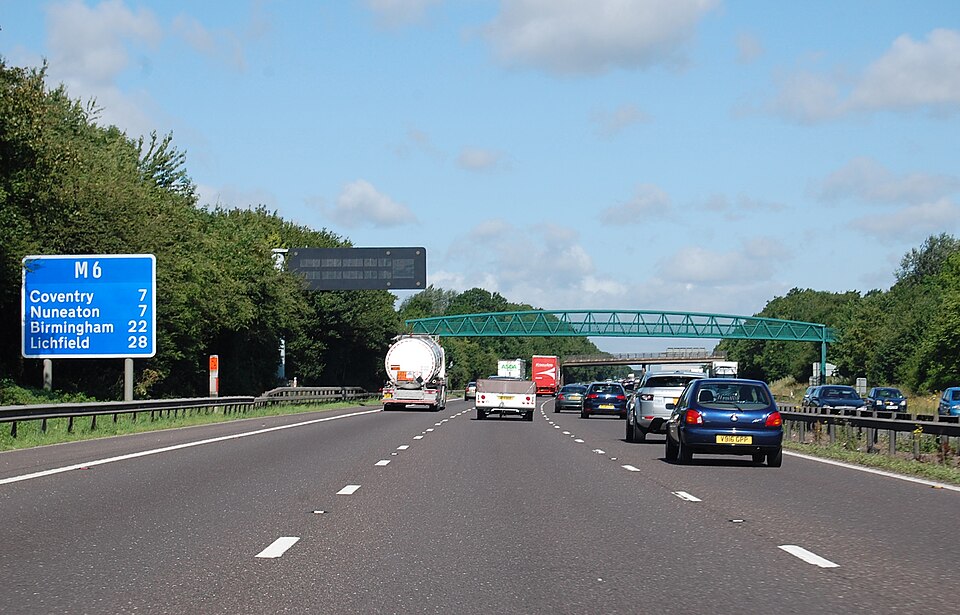
- Distance: London to Birmingham by road is roughly 190 km via the M1/M6. The straight‑line distance is around 160–165 km. Both comfortably exceed all madhhab thresholds.
- Start of travel: you become a traveller once you leave London’s built‑up area (not at your front door). If you leave from Zone 3 and join the motorway, you’ll reach the edge of the built‑up area fairly quickly.
- At destination: you plan to be in Birmingham for six hours. That’s well below 4 full days (and far below 15), so you remain a traveller.
- Praying: you may shorten Dhuhr and Asr in Birmingham (two rak‘ahs each). If you are still travelling at Isha, you may shorten Isha as well. Fajr and Maghrib are not shortened.
- Return: your traveller status ends when you re‑enter London’s built‑up area that evening.
Multi‑stop day trips and time on the ground
- Multiple stops: You can have several short stops in one or more towns. As long as you do not intend to stay 15 days (Hanafi) or 4 days (Shafi'i/Maliki/Hanbali) in any one place, your traveller status continues.
- Long layovers or waiting: Spending many hours at a service station, airport, or meeting venue does not by itself end traveller status. Only an intention to stay 4 or 15 days, per your madhhab, would.
- Big metro areas: If you drive across the same continuous urban sprawl without leaving the built‑up area, that usually doesn’t count as starting travel.
What if the prayer time starts before you leave?
Traveller status is judged when you actually perform the prayer, not when its time begins. If you prayed Dhuhr in full at home before setting off, there is nothing to shorten afterwards. If the time entered while you were still at home but you pray once you are on the road, many scholars allow you to shorten it. Cases like this turn on details, so put yours to a local teacher rather than to a rule of thumb.
Road vs straight‑line distance on a day trip
Classically, the measure was the customary journey between towns. Today, roads vary. That’s why Qasr Calculator shows both:
- Road distance: follows an actual drivable route, including diversions.
- Straight‑line distance: “as the crow flies” between the two points you set.
Some teachers prefer road distance for practicality; others accept straight‑line. If one measure meets the threshold and your madhhab or teacher accepts it, you may shorten. Because the calculator measures between the two pins you place, you can also test the stricter reading: set the first pin where your town’s built‑up area ends rather than at your front door, and see whether the trip still clears the threshold.
For a deeper dive into distance itself, see how far you have to travel to shorten your prayer.
Evidence in brief
- Qur’an 4:101 permits shortening the prayer during travel, a mercy from Allah.
- The Prophet ﷺ consistently shortened on journeys. When he stayed in Makkah during the Conquest, he shortened throughout that stay, which the schools use to derive limits for how long one can remain a traveller.
- He also said shortening is a charity from Allah, so accept His charity (reported in Sahih collections).
These sources underpin the practice across all four schools; the differences you see are in the details of distance and stay length.
Common pitfalls on day trips
- Assuming “no overnight, no qasr”: the same‑day return does not cancel traveller status if the distance is met.
- Mixing up combining with shortening: qasr is about fewer rak‘ahs; combining (jam‘) is a separate issue with its own rulings.
- Ignoring alternative routes: a shorter bypass might drop the road distance under the threshold. Use a tool to check.
Frequently asked questions
If I leave after Dhuhr time starts, can I still shorten Dhuhr on a day trip?
You may shorten once you have traveller status at the time you perform the prayer. If you already prayed Dhuhr in full before departure, there is nothing to shorten later. If the time entered while you were at home but you actually pray after leaving the built‑up area, many scholars allow qasr—confirm details with your local teacher.
Do flight distances count for a day trip (e.g., London–Paris and back)?
Yes. The same distance thresholds apply whether you travel by car, train or plane. If your route is about 77–80 km or more and you intend only hours at the destination, you remain a traveller and may shorten Dhuhr, Asr and Isha. Use the qasr distance calculator to check.
What if I spend many hours at a service area or office—does that end traveller status?
No. Long waits or several hours at a venue do not end traveller status by themselves. Traveller status ends when you intend a stay of 15 days (Hanafi) or 4 days (Shafi’i/Maliki/Hanbali) in a single place, or when you re‑enter your home town. Hours on the ground during a day trip are fine for qasr.
Do I have to combine prayers on a day trip to use qasr?
No. Shortening (qasr) and combining (jam‘) are separate. You can shorten Dhuhr, Asr and Isha as two rak‘ahs each without combining. Combining has its own rulings that vary by madhhab; if you plan to combine for practical reasons (e.g., tight schedules), seek advice from a scholar about your school’s position.
If my cities are connected by continuous suburbs, when does travel start?
You become a traveller when you leave the built‑up area of your town. In conurbations where urban areas blend together, identify where that area ends in the direction you are going. Qasr Calculator measures between the two points you set, so you can drop the starting pin at your home for the whole journey, or at the edge of the built‑up area if you follow the stricter reading, and compare the two.
Does Jumu‘ah apply to me on a Friday day trip?
Travellers are generally not obliged to attend Jumu‘ah and may pray Dhuhr (shortened) instead, though attending is valid if practical. Details vary across schools and local practice, especially in big cities. If a Friday day trip overlaps Jumu‘ah time, check with your imam or a trusted scholar for your situation.
Educational, and not a fatwa: this reflects widely held positions in the four Sunni madhhabs. For a ruling on your own situation, ask a qualified scholar.