hanafi
Is qasr wajib? What each madhhab says
In short
Hanafis hold that qasr—shortening Dhuhr, ‘Asr and ‘Isha to two rak‘ahs—is wajib (obligatory) for a traveller. In the Shafi’i, Maliki and Hanbali schools, qasr is a confirmed sunnah, preferable to praying four, but not compulsory. In all four schools, if you follow a resident imam you pray the full four. Fajr and Maghrib are never shortened.
Many travellers just want a yes‑or‑no. The complication is that the obligation itself is where the madhhabs differ: Hanafis require qasr, while the other three schools encourage it strongly but allow praying full. Below is how each school frames it, when you still pray full, and how this plays out on a real trip.
What do the four madhhabs say about whether qasr is obligatory?
- Hanafi: Qasr is wajib for a valid traveller. Completing four on one’s own is contrary to the school; the two beyond the shortened amount are treated as voluntary.
- Shafi’i: Qasr is a confirmed sunnah (emphasised sunna). Completing four is valid but less virtuous.
- Maliki: Qasr is recommended, not obligatory. Completing is valid, though shortening is preferred during travel.
- Hanbali: Qasr is a confirmed sunnah and better than praying full, but not compulsory.
| Madhhab | Is qasr obligatory? | If you pray full on your own | Notes |
|---|---|---|---|
| Hanafi | Wajib (obligatory) | Completing four is disliked; only two count as fard | Follows hadith “a charity… accept it” as binding in travel |
| Shafi’i | Sunnah mu’akkadah | Valid but less optimal | Do not count arrival/departure days in the 4‑day limit |
| Maliki | Recommended | Valid | 4 full days (20 prayers) ends traveller status |
| Hanbali | Sunnah mu’akkadah | Valid | Classical texts often say more than 20 prayers ends traveller status |
In all four schools, a traveller praying behind a resident imam must complete four rak‘ahs.
The evidence scholars cite for making or preferring qasr
- Qur’an 4:101 permits shortening in travel: “There is no blame upon you for shortening the prayer if you fear…” Scholars explain the Prophet ﷺ shortened consistently in travel, even without ongoing fear, establishing the concession.
- The hadith in Sahih Muslim: “It is a charity Allah has given you, so accept His charity.” Hanafis read this as an obligation to accept the concession; the other schools affirm it is a strongly emphasised sunnah.
- The Prophet ﷺ shortened throughout his journeys (including his stay around the Conquest of Makkah), which all schools take as the normative travel prayer.
Who counts as a traveller: distance and stay rules that trigger qasr
Qasr applies only when you are truly a traveller, which depends on distance and how long you intend to stay at your destination.
- Hanafi distance: about 77 km (48 miles). Traveller status ends with an intention to stay 15 days or more.
- Shafi’i, Maliki, Hanbali distance: about 80 km (50 miles; often expressed as 4 burud / 16 farsakh). Traveller status ends with an intention to stay 4 days or more. The Shafi’i do not count the days of arrival and departure; the Maliki count 4 full days (20 prayers); Hanbali texts classically say more than 20 prayers. For simplicity, many tools use 4 days for these three.
- Qasr applies to Dhuhr, ‘Asr and ‘Isha only. Fajr and Maghrib are never shortened.
Two points that are easy to mix up but are different questions:
- When can you start shortening? All four schools agree: not until you have left the built‑up area of your own town. Until then you are a resident and pray in full. See our guide: When does travel start for qasr? Leaving the city limits.
- How is the qualifying distance measured? This is disputed. Classical texts count from the edge of the town; many contemporary answers measure from where you set off. This only affects borderline trips. Distance tools cannot detect city limits; if you want the stricter reading, place your start at your town’s edge and compare.
A worked example: London to Birmingham
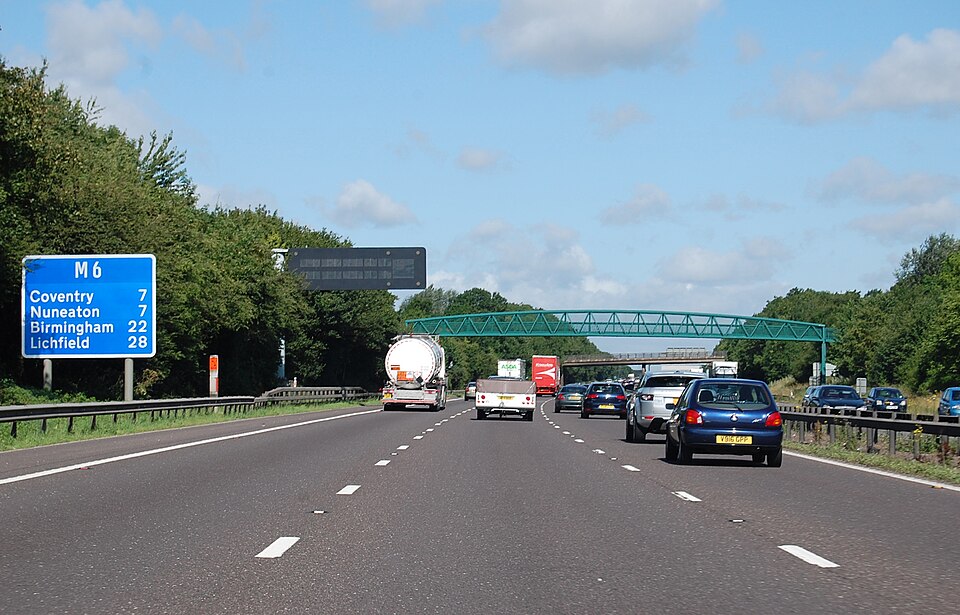
- Road distance from central London to central Birmingham is roughly 190 km (118 miles); straight‑line is around 160–165 km (99–103 miles). Both exceed the Hanafi 77 km (48 miles) and the Shafi’i/Maliki/Hanbali 80 km (50 miles) thresholds.
- If you plan to stay fewer than 15 days (Hanafi) or fewer than 4 days (the other three), you are a traveller.
- A Hanafi traveller must shorten to two rak‘ahs for Dhuhr, ‘Asr and ‘Isha. A Shafi’i, Maliki or Hanbali traveller should shorten as the preferred sunnah, though completing is valid.
To check routes and straight‑line distances anywhere, use the Qasr Calculator. It measures between the two points you enter along a road route you choose or as a straight line. It does not detect built‑up edges or your home location.
When must you still pray full even if you are travelling?
- Behind a resident imam: In all four schools, if you join a resident (muqeem) imam, you pray the full four. Join the imam’s taslim even if you are a traveller.
- Before leaving town: Until you have left your town’s built‑up area, you are a resident and pray full.
- Intending a long stay: If you intend to stay 15 days or more (Hanafi) or 4 days or more (Shafi’i, Maliki, Hanbali), you are a resident at that destination and pray full from arrival.
Applying the madhhab differences in everyday cases
- You are Hanafi, on a qualifying journey: Shorten; treating the concession as wajib best fulfils your school.
- You are Shafi’i, Maliki or Hanbali, on a qualifying journey: Shorten as the Sunnah practice; you may complete, but the Sunnah is stronger.
- You often pray in mixed congregations: If the imam is resident, complete four in all schools. If the imam is a traveller, Hanafis will end at two with the imam; others may also shorten.
- You are unsure about distance or days: Check the route and your planned stay. If you are near a threshold or have complex stops, confirm with a local scholar for your exact case.
Combining prayers is separate from shortening
Shortening (qasr) and combining (jam’) are different concessions. A Hanafi traveller typically shortens but does not combine, except at Hajj (‘Arafah/Muzdalifah). Shafi’i, Maliki and Hanbali travellers may combine under set conditions. For details, see: Combining prayers while travelling (jam’) and how it differs from qasr.
Why some scholars call qasr “a charity you should accept”
The Prophet ﷺ’s wording about accepting Allah’s “charity” captures the spirit of travel concessions: they are not second‑best, but a facilitation. Hanafis infer obligation in accepting it; the other schools insist it remains a strongly emphasised Sunnah. Either way, the traveller’s norm in the Sunnah is the shortened prayer. If your situation is unusual, speak to a trusted scholar to apply your school correctly to your journey.
Frequently asked questions
Is qasr fard or sunnah in the Hanafi school?
In the Hanafi school, a valid traveller must shorten Dhuhr, ‘Asr and ‘Isha to two rak‘ahs—qasr is wajib (obligatory). Completing four on your own is disliked; only two count as the obligatory prayer and the extra two are voluntary. Behind a resident imam, you still pray the full four.
If I’m Shafi’i, Maliki or Hanbali, do I have to shorten?
In the Shafi’i, Maliki and Hanbali schools, qasr is a confirmed sunnah and better than praying full, but it is not compulsory. You may pray full on your own, though shortening is the superior practice in travel. If you pray behind a resident imam, you follow the imam and complete four.
When can I start shortening—at the station or after leaving town?
All four schools agree you do not shorten until you have left the built‑up area of your own town. How to measure the qualifying distance is disputed: classical texts measure from the town edge; many today measure from where you set off. This only affects trips near the threshold; ask locally if unsure.
Do I shorten Fajr and Maghrib too?
No. Qasr only applies to the four‑rak‘ah prayers: Dhuhr, ‘Asr and ‘Isha. Fajr (two rak‘ahs) and Maghrib (three rak‘ahs) are never shortened in any madhhab. You may be able to combine prayers in some schools when travelling; see our article on combining to understand when that applies.
If I join a resident imam while travelling, what do I pray?
In all four schools, the traveller follows a resident imam and completes four rak‘ahs. The concession to shorten applies when praying alone or behind a travelling imam. If you join a congregational prayer late, complete your remaining rak‘ahs after the imam’s taslim as a resident would.
References
- Sahih Muslim 686 — Shortening prayer described as a charity from Allah
- Qur’an 4:101 – Shortening prayer in travel — Primary textual basis for qasr
- Traveller praying behind a resident must complete — Following resident imam requires four
Educational, and not a fatwa: this reflects widely held positions in the four Sunni madhhabs. For a ruling on your own situation, ask a qualified scholar.